
Un festival en héritage (A Festival in Legacy)
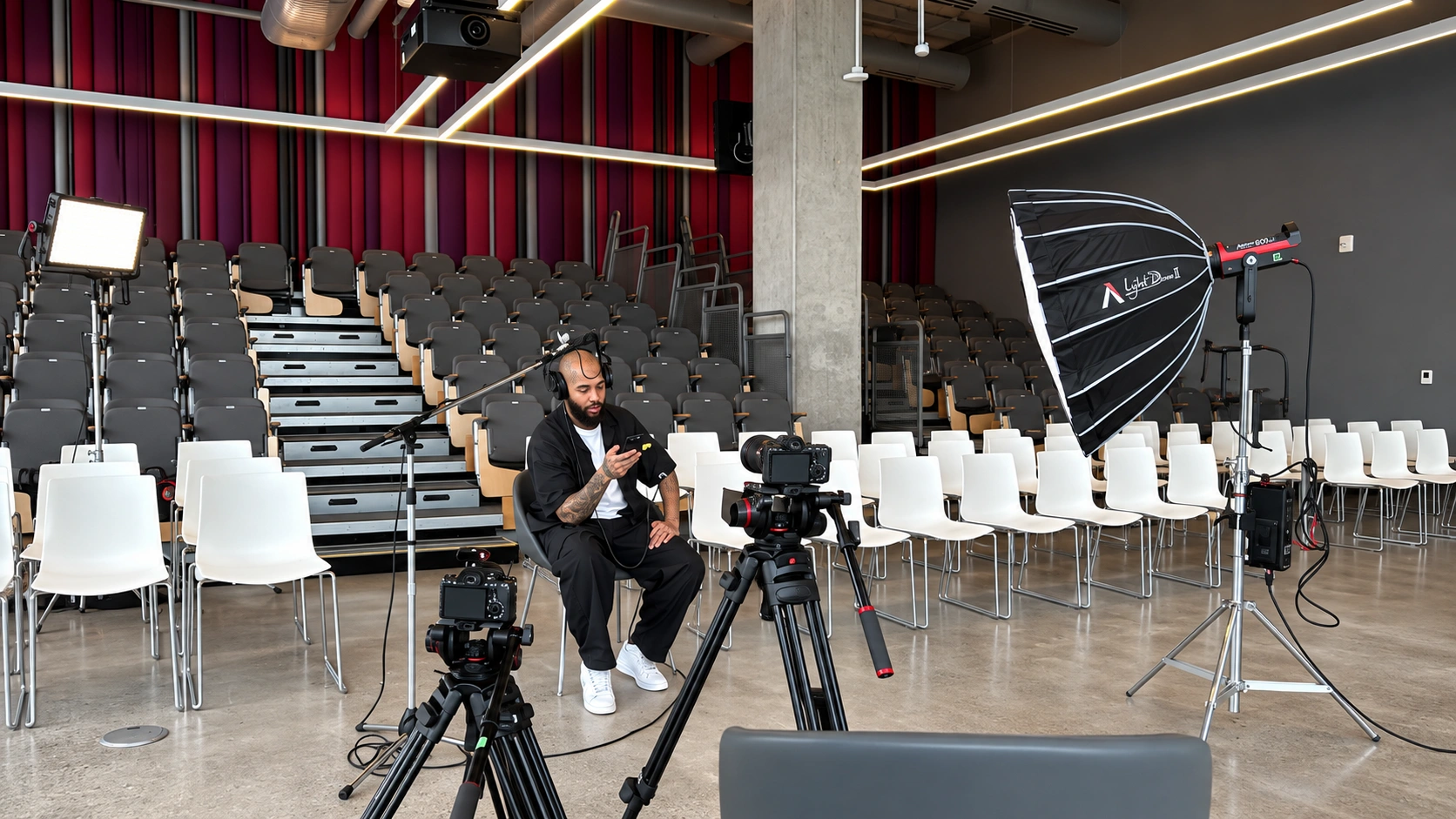
A Documentary by Hadley Foucher
In Toronto, watching a film in French can become much more than a trip to the cinema. It is a chance to hear one’s language in the public sphere, discover stories that resonate with personal experiences, and, at times, finally see oneself reflected on screen.
In Un festival en héritage, Hadley Foucher traces the story of Cinéfranco through nine interviews with people active in the cultural, media, and community sectors. The documentary chronicles the festival’s evolution while revealing the work required to sustain Francophone cinema in a predominantly English-speaking city.
Behind the screenings are the memories, encounters, and connections built over the years. In telling the story of Cinéfranco, the film also tells the story of a community that has made cinema a space for gathering, transmission, and collective memory.
A Story Told Through Many Voices
To tell the story of Cinéfranco, Hadley Foucher met with nine individuals from Toronto’s Francophone cultural, media, and community sectors.
Their testimonies offer different perspectives on the festival, as well as on what French-language cinema represents in a city where opportunities to experience it remain precious. Personal memories are interwoven with reflections on language, culture, and the role of Francophone communities in the public sphere.
Through writing, filming, editing, and visual animation, Hadley Foucher brings these voices together in a narrative that goes beyond the chronicle of an event to recount the evolution of a community.
Cinéfranco, A Living Legacy
At the heart of these testimonies is that of Marcelle Lean, founder and artistic director of Cinéfranco. Her journey makes it possible to trace the origins of the festival, its evolution, and the efforts made over several decades to provide Toronto audiences with lasting access to Francophone cinema.
The legacy of Cinéfranco, however, does not rest solely on the films that have been screened. It also lives in a darkened theatre, in post-screening discussions, in encounters with artists, and in the memories that audiences take with them.
The documentary shows how a cultural memory is built through works of art, but also through the people who discover them, share them, and return year after year to celebrate them.
Seeing Ourselves and Finding Ourselves
Through these stories, the documentary broadens its reflection on the role of cinema in the lives of Francophone communities.
One of the most compelling testimonies comes from Guillaume Lorin of CHOQ-FM 105.1. He reminds us that a community needs not only to hear its language in the media, but also to see its stories, faces, and lived realities on screen.
In Toronto, every French-language screening becomes an opportunity for recognition. Cinema creates a space where different generations, cultures, and experiences can come together around stories that reflect their lives and affirm their place in the city’s cultural landscape.
All Credits
- Direction: Hadley Foucher
- Production: Hadley Foucher
- Cinematography: Hadley Foucher
- Editing: Hadley Foucher
- Interview and production assistance: Lisa Moulet
- Original music / soundtrack: Moore
- With the participation of: Marcelle Lean, Guillaume Lorin, Xavier B-Bedard, Dyana Ouvrard, Carl Bouchard, Magda Jedrzejczak, Lucile Gérard, Pauline Goncalves