
Cultiver la table, nourrir la culture franco-ontarienne (How Culinary Traditions Nourish Franco-Ontarian Culture)
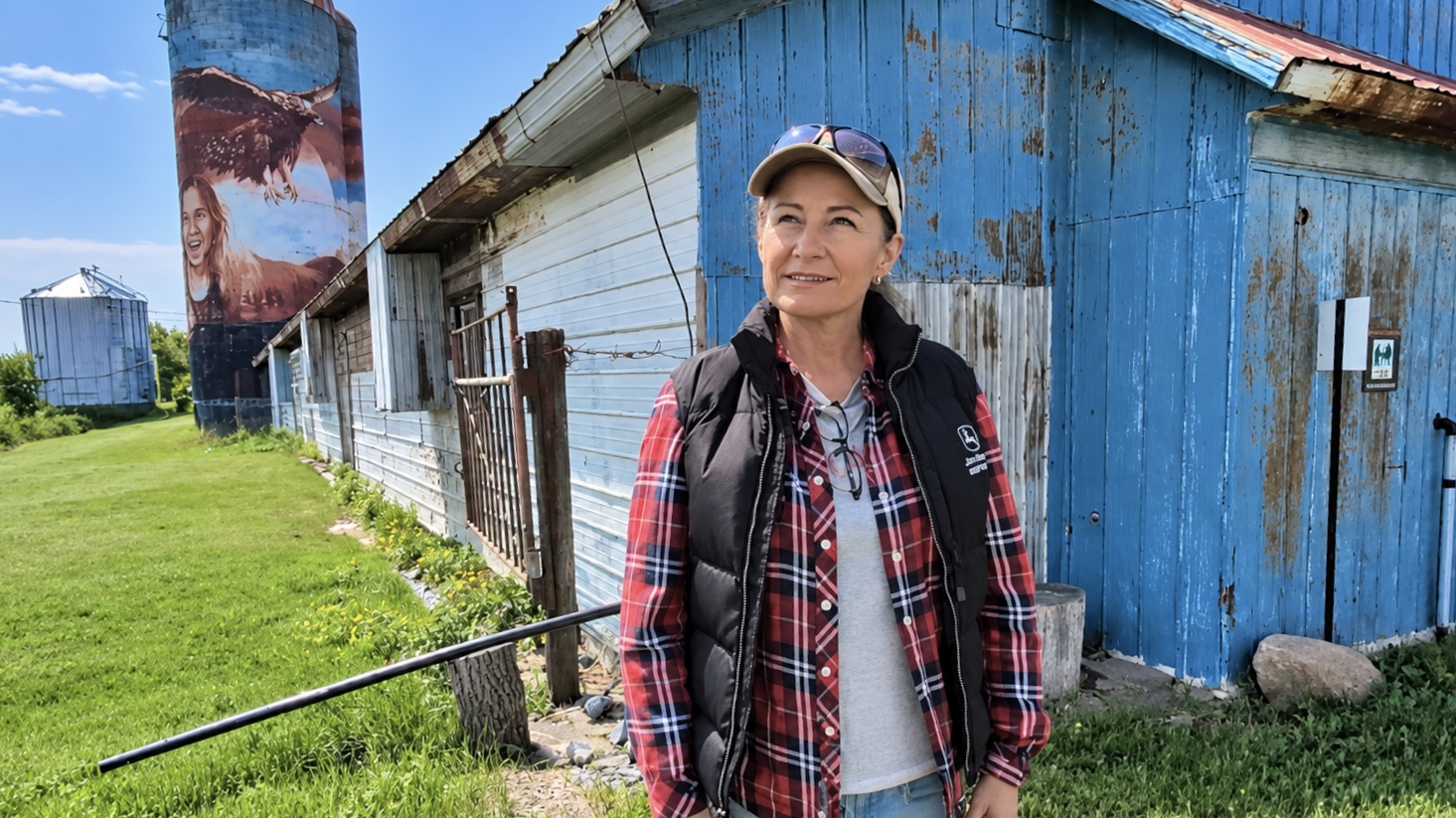
A farm, a community garden, a hop field, or a family livestock operation tells a story that goes far beyond what it produces. These places carry memories, knowledge, and different ways of living on the land and passing on its heritage.
For Cultiver la Table, nourrir la culture franco-ontarienne, Allison Leroux met with individuals involved in agriculture, local food production, and food education. These conversations gave rise to four bilingual documentary portraits combining photographs, quotations, narrative texts, carousels, and short videos.
Created in Caledon, Guelph, and Embrun, these portraits show how Francophone culture is also passed on through the land, family memory, agricultural practices, and the relationships
Four Portraits, Four Connections to the Land
Together, the four portraits present different ways of cultivating, nourishing, and passing on knowledge. Each series offers an entry into a particular environment and introduces the people, practices, and stories that bring it to life.
Chickadee Hill Farm – Jean-François Morin
At Chickadee Hill Farm in Caledon, Jean-François Morin practises small-scale diversified farming. His story connects agricultural work and animal welfare with family life and the relationships that develop around the farm.
Local production becomes a way of sharing knowledge and values related to food, community, and the land.
Jeannette Mongeon et Michel Dignard
In Embrun, Jeannette Mongeon and Michel Dignard operate a family farm deeply rooted in the rural life of Eastern Ontario.
Their story brings together contemporary farming practices, family memories, and a connection to the land passed down through generations. It reflects a Franco-Ontarian heritage that continues to live on through the farm’s daily work.
GOODLOT Farmstead Brewing Co. – Phil Winters
In Caledon, Phil Winters is co-founder of GOODLOT Farmstead Brewing Co., an organic hop farm and solar-powered brewery.
His portrait shows how hop cultivation, local sourcing, and brewing can be part of a regenerative agriculture approach and the protection of farmland.
Karen Houle et le jardin communautaire Huron Street
In Guelph, Karen Houle turns community gardening into a space for learning, sharing, and participation.
At the Huron Street Community Garden, organic agriculture, composting, and food education enable participants to expand their knowledge, reconnect with the production of their food, and build relationships through the land.
A Sense of Belonging Passed On in Different Ways
For some of the people interviewed, French is no longer the primary language of everyday life. Yet their attachment to their Franco-Ontarian heritage remains strong.
It is reflected in family memories, recipes, expressions, agricultural practices, knowledge connected to the land, and food traditions. Francophone culture is transmitted in many ways. It can also live in a way of farming, feeding others, telling stories about childhood, or caring for a territory.
By bringing these journeys together, the portraits offer an open vision of Franco-Ontarian identity. They show a sense of belonging that evolves with people and generations while remaining rooted in memory, practices, and relationships.
All Credits
- Project created by: Allison Leroux
- As part of the digital storytelling initiative: Interwoven
- Research, interviews, photography, videography, editing, writing, translation and distribution: Allison Leroux
- Participants and interviewees: Karen Houle, Jeannette Mongeon, Michel Dignard, Jean-François Morin, Phil Winters
- Documented locations: Chickadee Hill Farm, Ferme Dignard & Mongeon, GOODLOT Farmstead Brewing Co., Huron Street Community Garden